Anthropic’s Claude: A Threat or Opportunity for the IT Industry?
Introduction:
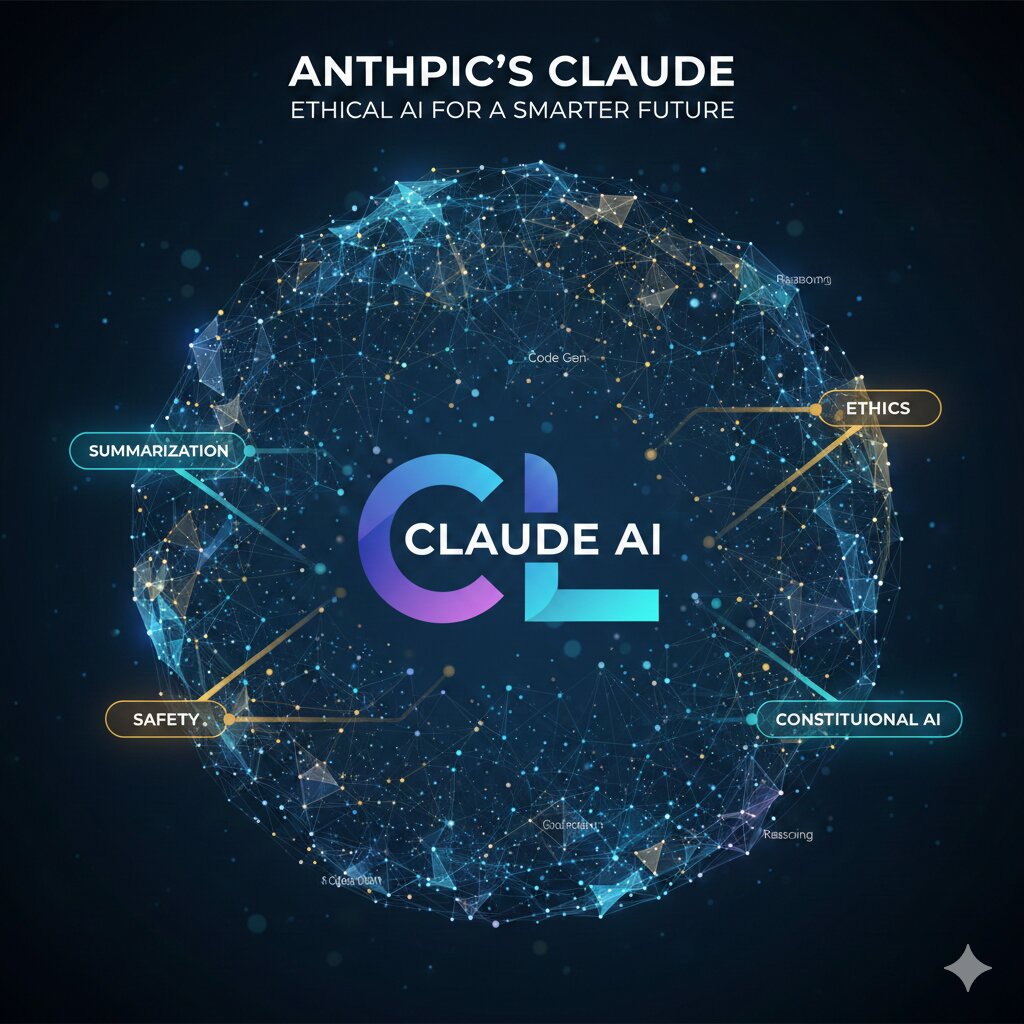
The artificial intelligence landscape is evolving at an unprecedented pace, with new players constantly emerging to push the boundaries of what’s possible. Among the most intriguing and impactful new entrants is Anthropic, an AI safety and research company, and its flagship AI model, Claude. Developed with a strong emphasis on safety, ethics, and “Constitutional AI,” Claude presents both immense opportunities and potential disruptions for the IT industry. This article delves into Claude’s unique capabilities, its diverse applications, and the significant implications it holds for the future of technology and employment within the IT sector.
What is Anthropic and Claude?
Anthropic was founded by former members of OpenAI who sought to create AI systems that are safe, interpretable, and aligned with human values. Their core philosophy revolves around “Constitutional AI,” a novel approach to training AI models. Instead of relying solely on human feedback for alignment (Reinforcement Learning from Human Feedback or RLHF), Constitutional AI guides the model with a set of principles or a “constitution” to ensure its responses are helpful, harmless, and honest. This method aims to reduce biases and undesirable outputs, leading to more robust and trustworthy AI systems.+2
Claude is Anthropic’s foundational large language model (LLM). It demonstrates impressive capabilities in understanding, generating, and summarizing human language, performing complex reasoning tasks, and engaging in natural, coherent conversations. Available in different versions, including Claude Instant (a faster, more affordable option) and the more powerful Claude 2, it’s designed to be a versatile tool for a wide range of applications.
Key Features and Capabilities of Claude:
- Advanced Language Understanding and Generation: Claude can comprehend nuanced language, context, and intent, allowing it to generate highly relevant and human-like text for various purposes.
- Context Window: Claude boasts an exceptionally large context window, enabling it to process and remember significantly more information during a conversation or task. This allows for more extended and complex interactions without losing track of previous details.
- Reasoning and Problem Solving: Beyond simple text generation, Claude can perform sophisticated reasoning, analyze data, identify patterns, and offer insightful solutions to complex problems.
- Code Generation and Analysis: Claude can assist developers by generating code snippets, debugging, explaining complex code, and even refactoring existing codebases.
- Summarization and Information Extraction: Its ability to process vast amounts of text makes it excellent for summarizing lengthy documents, extracting key information, and answering specific questions based on provided content.
- Safety and Alignment: The “Constitutional AI” approach ensures Claude is designed to be less prone to generating harmful, biased, or unethical content, making it a safer choice for sensitive applications.

Applications of Claude Across Industries:
Claude’s versatility opens doors to numerous applications, particularly within the IT industry and beyond:
- Software Development and Engineering:
- Code Assistant: Developers can leverage Claude to generate boilerplate code, suggest algorithms, explain complex functions, and even help in debugging.
- Automated Testing: Claude can assist in generating test cases and scenarios, potentially speeding up the QA process.
- Documentation: Automatically generate technical documentation from code, saving significant time and effort.
- Refactoring and Optimization: Suggest ways to refactor code for better performance or readability.
- Customer Service and Support:
- Intelligent Chatbots: Power highly sophisticated chatbots capable of handling complex customer inquiries, providing detailed solutions, and offering personalized support.
- Ticket Triaging: Analyze incoming support tickets, categorize them, and even suggest potential solutions or escalation paths.
- Content Creation and Marketing:
- Automated Content Generation: Create articles, blog posts, marketing copy, social media updates, and product descriptions at scale.
- Content Summarization: Quickly generate summaries of long reports, research papers, or articles.
- Personalized Marketing: Develop highly personalized marketing messages based on user data and preferences.
- Data Analysis and Business Intelligence:
- Natural Language Querying: Allow business users to query databases and generate reports using natural language, democratizing data access.
- Trend Analysis: Identify trends and patterns in large datasets by processing natural language descriptions of the data.
- Education and Training:
- Personalized Learning: Create customized learning paths and explanations for students based on their individual needs and progress.
- Interactive Tutorials: Develop interactive AI-powered tutorials and educational content.
The Threat to the IT Industry: A Nuanced Perspective
While Claude offers immense potential, its advanced capabilities also raise legitimate concerns about job displacement and the need for significant skill shifts within the IT industry.
- Automation of Repetitive Tasks:
- Entry-Level Coding: Many routine coding tasks, script generation, and basic bug fixing could be increasingly automated, impacting entry-level developer roles.
- IT Support: Basic IT support functions and helpdesk roles that involve answering common queries might see significant automation.
- Data Entry and Processing: Roles heavily focused on data entry, cleaning, and basic processing are highly susceptible to automation.
- Skill Shift and Reskilling:
- Demand for AI-Literacy: IT professionals will need to understand how to effectively use and integrate AI tools like Claude into their workflows. Prompt engineering – the art of crafting effective instructions for AI – will become a crucial skill.
- Focus on Higher-Order Thinking: The demand will shift towards roles requiring critical thinking, creativity, complex problem-solving, AI governance, and strategic decision-making that AI cannot yet replicate.
- New Roles Emergence: We may see the emergence of new roles such as AI trainers, AI ethicists, AI integration specialists, and prompt engineers.
- Impact on Software Development Lifecycle:
- Faster Development Cycles: AI tools can drastically accelerate development, potentially reducing the need for large teams in certain areas.
- Quality Assurance: AI can aid in testing, but human oversight and sophisticated test strategy development will remain critical.
- Security Concerns:
- While Anthropic prioritizes safety, the widespread use of powerful AI tools always introduces new security vectors. Managing AI-generated code, ensuring data privacy when AI processes sensitive information, and preventing malicious use of AI will be ongoing challenges for IT security teams.
- Competitive Landscape:
- Companies that effectively adopt and integrate AI tools like Claude will gain a significant competitive advantage, potentially leaving behind those that are slow to adapt. This could lead to a restructuring of the IT services market.
CURRENT SUPPLY CHAIN JOBS IN INDIA
Opportunities for the IT Industry:
Despite the threats, Claude and similar AI tools also present massive opportunities:
- Increased Productivity and Efficiency: Automating mundane tasks frees up IT professionals to focus on more complex, innovative, and strategic work.
- Innovation and New Product Development: AI can act as a co-pilot for innovation, helping IT teams brainstorm new ideas, develop prototypes faster, and explore entirely new solutions.
- Personalized Experiences: IT companies can leverage AI to create highly personalized software, services, and user experiences, leading to greater customer satisfaction.
- Cost Reduction: Automation and efficiency gains can lead to significant cost reductions in operations and development.
- Solving Complex Problems: AI’s ability to process and analyze vast amounts of data can help IT professionals tackle challenges that were previously insurmountable.
- Accessibility: AI tools can make technology more accessible to non-technical users, broadening the market for IT solutions.
Strategies for the IT Industry to Adapt:
To thrive in this new AI-driven era, the IT industry must proactively adapt:
- Invest in Reskilling and Upskilling: Companies must invest heavily in training their workforce in AI literacy, prompt engineering, AI development, and AI ethics.
- Embrace AI as a Co-pilot: Rather than viewing AI as a replacement, see it as a powerful tool that augments human capabilities.
- Focus on Value-Added Services: Shift focus from basic, commoditized IT services to high-value consulting, integration, and bespoke AI solution development.
- Foster a Culture of Continuous Learning: Encourage employees to constantly learn and experiment with new AI tools and techniques.
- Develop AI Governance and Ethical Frameworks: Establish clear guidelines for the responsible and ethical use of AI within the organization.
- Collaborate with AI Researchers: Partner with companies like Anthropic to stay at the forefront of AI advancements.
Conclusion:
Anthropic’s Claude represents a significant leap forward in the capabilities of large language models, particularly with its strong emphasis on safety and constitutional AI. For the IT industry, this innovation heralds a period of profound transformation. While the automation of certain tasks poses a threat to existing job roles, it simultaneously unlocks unprecedented opportunities for increased productivity, accelerated innovation, and the creation of entirely new services and job functions. The key to navigating this evolving landscape lies in proactive adaptation, continuous learning, and a strategic embrace of AI as a powerful partner in shaping the future of technology. The IT professionals and organizations that skillfully integrate tools like Claude into their operations will not only survive but thrive, leading the charge into an exciting new era of intelligent technology.
Summary: Key Takeaways for IT & Supply Chain Professionals
- From Assistant to Coworker: In 2026, Claude has evolved from a simple chatbot into “Claude Cowork,” an agentic system capable of executing multi-step workflows autonomously, rather than just suggesting text.
- The “Jagged Frontier” of Automation: While Claude can automate up to 50% of entry-level white-collar tasks (like basic coding and data triaging), it still struggles with high-level strategy, legacy system debt, and complex human negotiations.
- Supply Chain Resilience: For the supply chain sector, Claude is a game-changer for compliance and risk management, able to instantly parse thousands of pages of SLAs and international trade regulations to identify hidden bottlenecks.
- The “Plumber” Paradox: As AI generates more software, the demand for “IT Plumbers”—specialists who can integrate, secure, and maintain the “plumbing” between AI agents and enterprise databases—is actually expected to rise.
- Outcome-Based Billing: The IT services industry is shifting away from “hours worked” billing toward “outcome-linked” models, rewarding efficiency over headcount.
Frequently Asked Questions (FAQ)
It is a threat to repetitive, manual coding tasks. In 2026, many engineers no longer write “boilerplate” code; they act as editors and architects, using Claude to generate the foundation. While entry-level roles are under pressure, the demand for senior architects who can oversee AI-generated systems is at an all-time high.
Claude is built on Constitutional AI, meaning it is governed by a strict set of safety principles. This makes it the preferred choice for regulated industries like Supply Chain, Finance, and Healthcare, where “hallucinations” or biased data could lead to multi-million dollar compliance failures.
Yes. Claude’s latest plugins allow it to:
Automate Supplier Onboarding: Verifying licenses and tax IDs in seconds.
Risk Monitoring: Scanning global news and weather data to predict shipping delays.
Contract Analysis: Extracting penalties, delivery windows, and Force Majeure clauses from unstructured PDF contracts.
The most valuable skills in 2026 are Agent Orchestration (managing multiple AI agents), AI Governance (ensuring AI follows legal and ethical rules), and System Design. Technical “literacy” is now more important than “syntax fluency.”
Investors fear the “SaaSpocalypse”—a scenario where a single powerful AI like Claude replaces ten different specialized software tools. This forces IT firms to move away from labor-intensive delivery models and toward high-value AI integration services.